Tuesday, 28 May 2013

The Pearly Profusion of the Multitudinous Margarites


The liquid drops of tears that you have shed
Shall come again, transformed to orient pearl.
Shakespeare: Richard III, Act IV, Scene IV
The notion that pearls are tears rendered into gems is found in many ancient stories and is a theme beloved by poets throughout the ages. In the twentieth century, T S Eliot alluded to a similar thought in The Waste Land,
Here, said she,    
Is your card, the drowned Phoenician Sailor,           
(Those are pearls that were his eyes. Look!)

Ladies and their Pearls

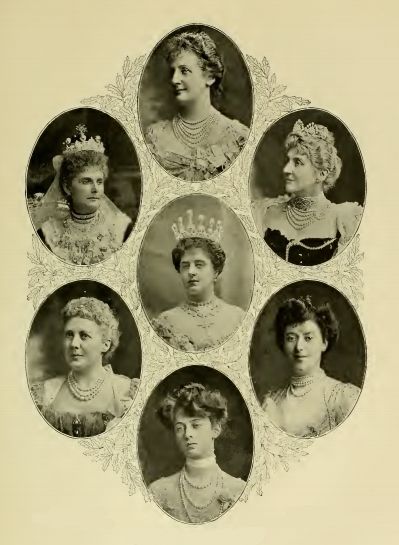
The beauty and chaste purity of pearls have led to them being viewed as the perfect gift for brides to wear, although a parallel tradition held that each pearl worn by a bride on her wedding day presaged a tear she would later shed during her marriage, (as it would be an extremely unworldly bride to expect an entirely tear-less marriage, many feel it’s well worth the risk).
As pure as a pearl,
And as perfect: a noble and innocent girl.
Owen Meredith (Lord Lytton), Lucile, Pt II, Canto VI
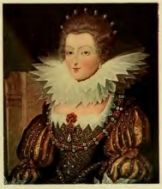
The ladies-in-waiting of Empress Eugénie tried in vain to dissuade from wearing long strings of pearls when she married Napoleon III, in 1853, and many said, after the event, that her subsequent tragic life was due to wearing so many pearls to her wedding. 
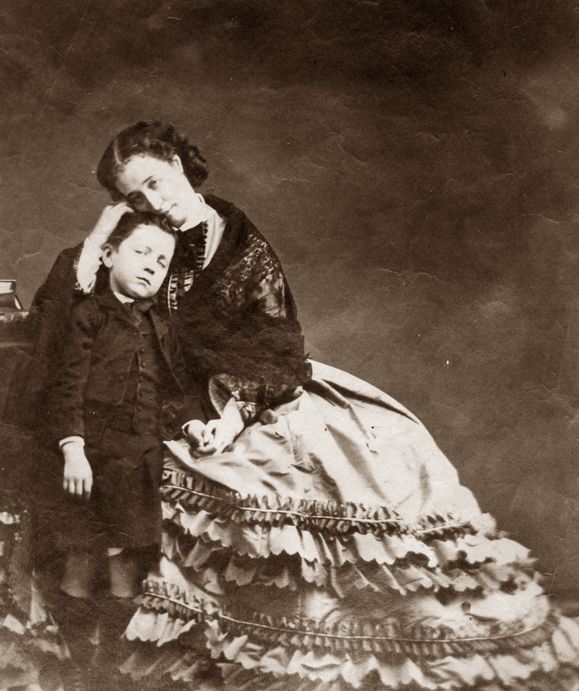
The Empress Eugenie

Similarly, Queen Margaret Tudor, wife of King James VI of Scotland, prior to the Battle of Flodden in 1513, dreamt for three consecutive nights that all her jewellery had turned into pearls, which was interpreted as an ill-omen of forthcoming widowhood and disaster. Pierre de Rosnel, writing in the seventeenth century, allies the pearl to Venus, born of heaven and the sea,
“… so in like manner the pearl — the loveliest of all gems — is formed in the sea and is the offspring of the dew of heaven.”
 Rosnel, Le Mercure Indien, ou le Trésor des Indes, 1672 
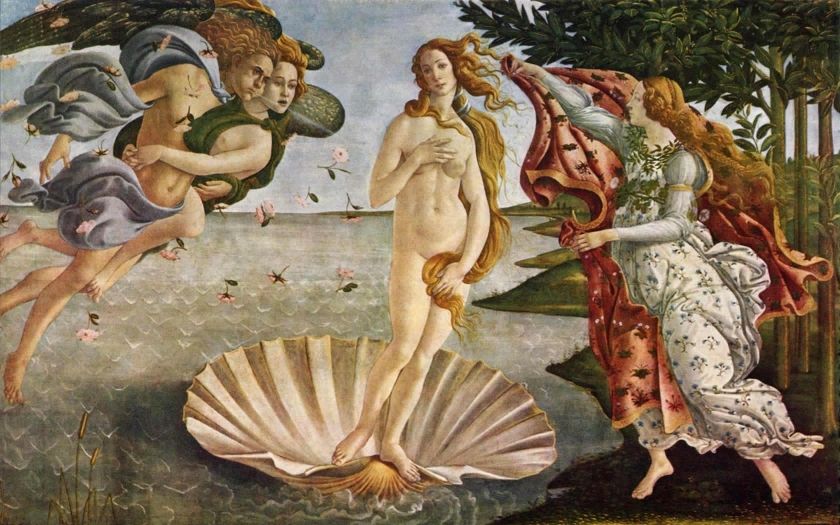
Botticelli - The Birth of Venus

This is another reason why brides, pearls and the Goddess of Love are so closely associated. An added level of purity surrounds the pearl as it is taken from nature in a perfect state, without the need for the hand of man to improve it in any manner, and this purity is reflected in the name of Margaret, which derives from the Persian Murwari, (pearl, child of light), through the Greek μαργάρίτης, and is found in variations throughout Europe, from the French Marguerite and Margot, German Gretchen and Grethel, Italian Margherita and Rita, to the English Marjorie, Peggy and Madge. 
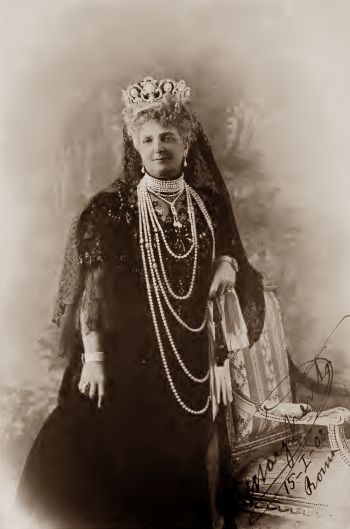
The Dowager Queen Margherita of Italy

There are several St Margarets, all of whom symbolise innocence and purity, including St Margaret of Antioch, ‘the mild maid of God’, who is the embodiment of feminine innocence and whose attribute is a string of pearls, St Margaret Ætheling, canonized in 1215 and adopted as the patron saint of Scotland in 1673, or Margaret, ‘the Pearl of Bohemia’, held in especial reverence by the Danes. 
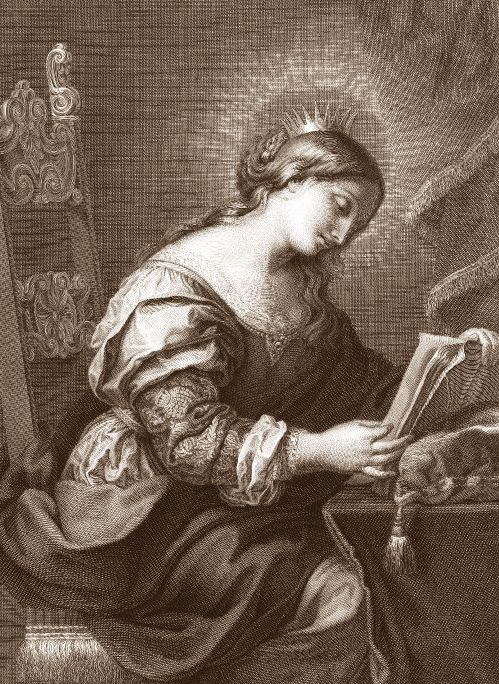
St Margaret of Scotland

In literature, Margarets abound as heroines of innocence, from Goethe’s Gretchen, in Faust, Tennyson’s ‘Sweet pale Margaret’, and Scott’s ‘Ladye Margaret, the Flower of Teviot’. William Drummond of Hawthornden plays with the name and the association with pearls in his An Epitaph of One Named Margaret
In shells and gold pearls are not kept alone,
A Margaret here lies beneath a stone.”

Charles VI of France

As may be expected for something so associated with purity, pearls were once a valuable, if mildly ineffectual, medicine. Crushed pearls, dissolved in distilled water, were given to Charles VI of France, (called Charles the Mad), in an attempt to cure his bouts of insanity. Lorenzo de Medici, ‘The Magnificent’, lay dying of fever at Careggi and was also given pulverized pearls as a cure; when asked how it tasted, Lorenzo is said to have replied, 
As pleasant as anything can be to a dying man.” 
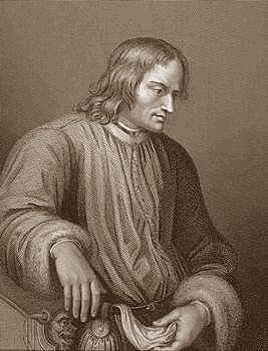
Lorenzo de Medici

Draughts of powdered, pulverized or dissolved pearls were also used as a symbol of sacrifice, as in Shakespeare’s Hamlet, when Claudius speaks of a ‘union’, a common term for a pearl, in the lines,
The king shall drink to Hamlet's better breath;
And in the cup an union shall he throw.
Richer than that which four successive kings
In Denmark's crown have worn.”

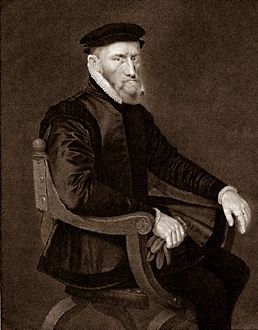
Sir Thomas Gresham

A Spanish ambassador to the court of Queen Elizabeth boasted of the wealth and magnificence of his sovereign’s court. Sir Thomas Gresham, irked by this Iberian arrogance, countered that there were men in England who spent more on one meal than the Spanish King and all his grandees, and laid a wager that he could prove his claim. Some time later, this same ambassador happened to call on Sir Thomas at meal-time and found him dining on a very dinner, so declared to have won the bet. 
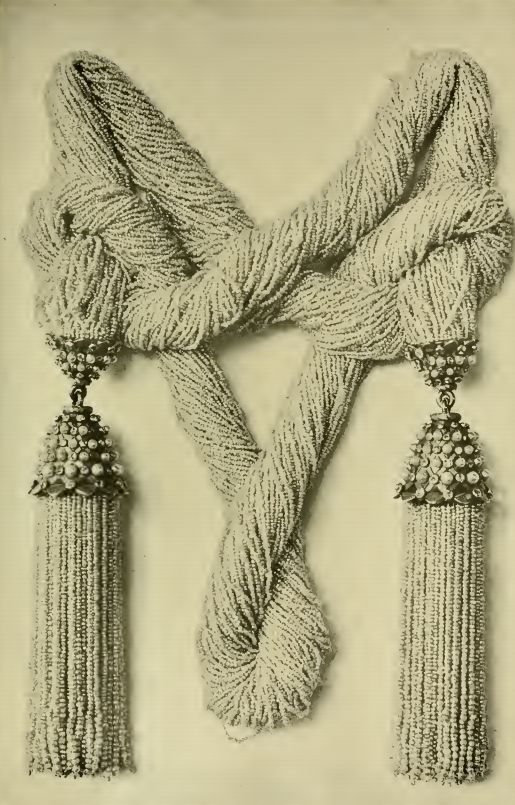
A Necklace made from 126,000 seed pearls

Not so, said Sir Thomas, and took a box from his pocket, drew forth an exquisite oriental pearl, crushed it into a powder which he stirred into a glass of wine, and drank a health to his Mistress, the Queen. I have, Gresham told the Spaniard, refused £15,000 for that pearl, have I won the wager? The ambassador was forced to concede defeat.


Monday, 27 May 2013

The Pearlescent Peculiarities of the Nacreous Nodules


               Submerged beneath a southern sea, inside a shell something stirs. It itches, it irritates and a shellfish flinches. It flexes, undulating its body and tries to rid itself of the intruder, but to no avail. The thing will not be moved. So the shellfish begins the long process of covering the irritating interloper with nacre, in layer after layer, until, instead of an unwanted incursion, there is a smooth sphere that now longer scratches the mollusc’s delicate body. And this sphere is now very much wanted indeed, as it is now a pearl. 

The internal structure of a bi-valve

It’s a common misconception that pearls are formed when a grain of sand makes its way into an oyster shell, but the intruder is more likely to be a tiny parasite, the larva of another sea-creature or one of the oyster’s own eggs that gets covered in mother-of-pearl. It’s not just oysters either, as many bi-valve molluscs form pearls around invading irritants, including mussels and clams. The shells of many molluscs and brachiopods are made up of three layers; an outer layer, called the periostracum, a middle prismatic layer and an inner nacreous layer. 

The Pearl Fishers

Inside the shell, the mantle, a flap or fold of flesh, covers all of either the right or left side of the nacreous layer, and forms a ridge or margin at the outermost edge, from which the two outermost layers are produced, whilst the rest of the mantle secretes the pearly inner layer. Should a irritating particle or parasite become lodged between the mantle and the upper layers, nacre is secreted over it and it is incorporated into the body of the shell, whereas something that enters the interior of the creature becomes covered in layers of nacre and a pearl is produced. 

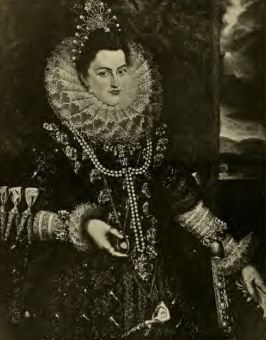
Clara Eugenia of Spain in her Pearls

At first, the layers conform to the contours of the foreign body, but over time the increasing numbers of layers tend to produce a spheroidal or spherical shape, unless the intrusion is so pronounced that an irregular – or baroque – pearl is made, and these command a lower price, purely on aesthetic grounds. It is reasonable to assume that pearls were the earliest of valued gems, as fish-eating ancient peoples would have inevitably have come across them, and their immediate natural beauty, free from the need of further art to enhance it, must have ensured their desirability. 

The Rana of Dholpur in his Pearls

Pearls appear in the ancient Indian religious texts, the Ramayana and the Mahabharata, and in Hindu mythology the pearl is associated with Krishna, the eighth avatar of Vishnu, who drew one from the sea to adorn his daughter, Pandaia, on her wedding day. 

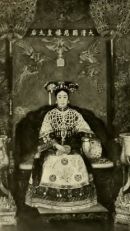
The Dowager Empress of China in her Pearls

In the ancient Cingalese chronicles, the Mahavansa and the Dipavansa, pearls are mentioned as being sent as gifts from Ceylon; the Chinese Shu King notes that, in the twenty-third century BCE, Yü received river pearls in tribute, and the ancient Chinese dictionary the Ny’ha (c.1000 BCE) mentions pearls as precious jewels that come from Shen-si province. 

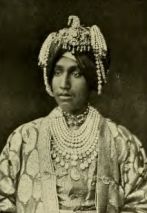
The Maharajah of Patiala in his Pearls


Authorities vary in their opinion on the translations of various words for precious jewels in the Old Testament, but there are numerous mentions of pearls in the New Testament, as there are in the Talmud, where they signify something either very costly or very beautiful. 

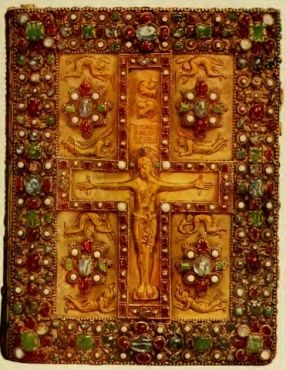
The Ashburnham Gospel decorated with Pearls

The Quran has pearls aplenty too, particularly in Paradise, where the trees bear pearls and emeralds. Ancient Greek writers mention pearls as early at the fifth century BCE, and later Roman writers like Pliny write about them, including a description of Pompey’s victory parade where thirty-three crowns of pearls were displayed. The Emperor Caligula had pearls sewn into the harness of Incitatus, his favourite horse that legend says he raised to the rank of Senator, and he wore slippers embroidered with pearls. 

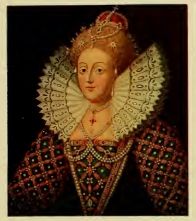
Elizabeth I in her Pearls

By the Middle Ages, every Emperor, King or Pope worth his salt would have his regalia made from gold and studded with diamonds, jewels and pearls. At the meeting of Henry VIII and Francis I at the Field of the Cloth of Gold, in 1520, the banqueting chamber was decorated with embroidered gold and pearl hangings, when Henry was introduced to Anne of Cleves, he wore a coat of purple velvet with clasps made from gold, diamonds, rubies and oriental pearls, and Anne’s wedding gown was made from cloth of gold embroidered with large flowers made from pearls. 

Elizabeth of France in her Pearls

When the New World was discovered, a new source of pearls emerged; Montezuma gave precious gifts to Cortez, who returned these golden presents, with emeralds, rubies and pearls, to Europe. The high walls and the roof of the temple of Tolomecco were made from mother of pearl, with strings of pearls and plumes of feathers hanging from the walls, the graves of its kings had shields adorned with pearls placed over them, and in the centre of the temple were vases filled with costly pearls. 

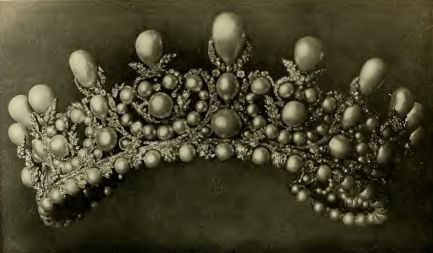
Grand Pearl Diadem of the French Crown Jewels

Pearls flooded back to the courts of Europe; Marie de Medici wore a gown to the christening of her son that was decorated with 3,000 diamonds and 32,000 pearls, and the Elector Maximilian of Bavaria sent his future bride a present of a necklace of 300 selected pearls, each worth 1,000 guldens.

The Czarina of Russia in her Pearls

Tomorrow – Myth and Magic of Pearls


Sunday, 26 May 2013

The Wonderous Worth of the Gigantic Gemstone


                  On the evening of January 27th 1905, Mr Frederick Wells, a mine manager, was making his rounds of the new No 2 Premier Mine, near Pretoria, South Africa, when he saw something gleaming the rays of the dying sun, at the brink of the open workings. He picked up a large stone, put it into the pocket of his sack coat, and went back to the company office to examine his find. At first, it was thought that Wells had picked up a piece of rock crystal and it was almost thrown aside, but on closer examination, the stone was found to be a diamond of unprecedented size, weighing over 1.3 pounds, or 3253 ¾ carats. 

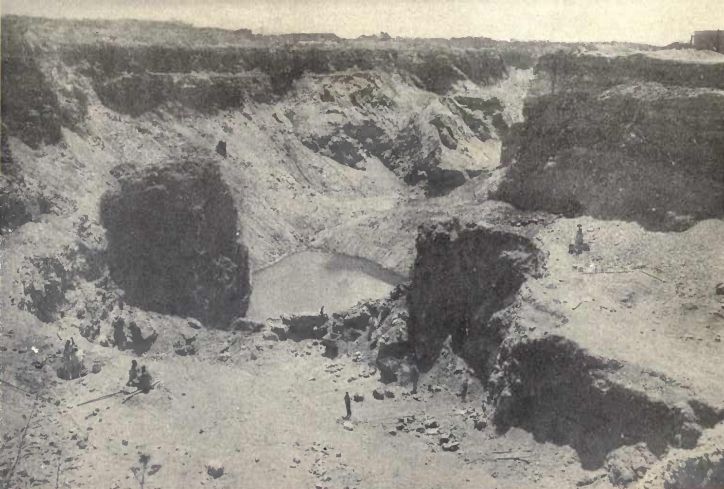
The Last Open Workings at Kimberley - 1889

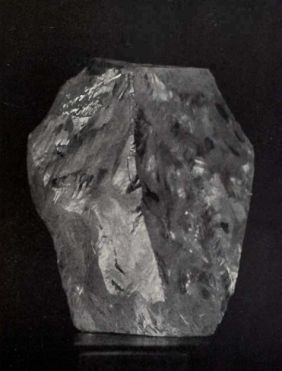
As the stone had a distinct fracture line on one face, it was thought to be a fragment of a larger octahedral crystal, although the corresponding piece has not (yet) been unearthed. The stone was named after the chairman of the Premier (Transvaal) Mining Company, (later Sir) Thomas Cullinan, and purchased by the Transvaal Government for £200,000, although it was insured for £1,500,000. It was decided that this huge gemstone should be presented to King Edward VII as a gift for his 66th birthday, as a suitable token of the entry of South Africa into the British Empire, but there was the problem of transporting it from the Cape to England. 

The Cullinan Diamond in its rough state

A facsimile stone was sent by steamboat, and accompanied by detectives, as a diversionary tactic to attract potential thieves, whilst the real stone was packed into a plain box and sent by normal parcel post (although it was sent by registered mail). To the dismay of London jewellers, when the rough diamond was examined, the Crown authorities decided to ship the stone to Amsterdam for cutting and polishing. 

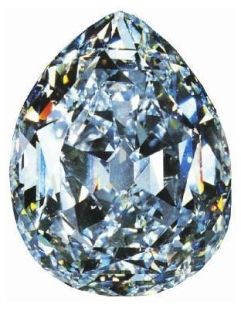
Cullinan I in its cut state

The stone was not perfect, and it would have been impossible to form it into one enormous brilliant cut gem; there was a small, black spot in the centre, and although the stone was remarkably clear, there were other graphitic spots close to the surface, and other discolouration on the outside. At one point, there was an internal crack, and at another, there was an opaque, milky mass, of a brown colour, with what looked like iron oxide stains. 

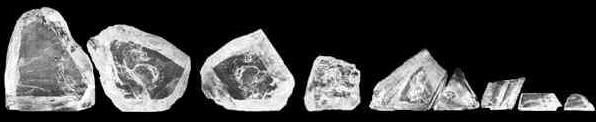
The Fragments of the Cullinan after cleaving

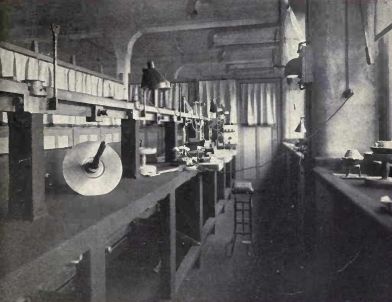
Therefore, the decision was made to break up the rough stone into smaller parts, with the work to be carried out by the house of J Asscher and Co, of Amsterdam and Paris. At the beginning of 1908, the Cullinan Diamond was moved, under escort, to the Asscher fabriek on Tulp Straat, where it was kept in a vault with concrete and steel walls two feet thick, with Dutch secret servicemen and Scotland Yard detectives guarding the establishment. 

The Cutting Room at Asscher's where the Cullinan was cut

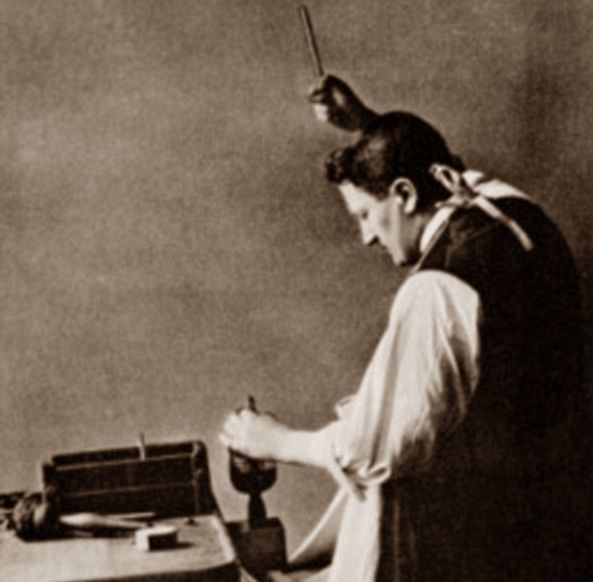
The experts examined the stone for weeks, deciding how best to cut it before, on February 10th 1908, Mr Joseph Asscher, the finest diamond cleaver in the world, made ready to make the first cut, under the supervision of Messrs M J Levy and Nephews, the precious stone experts. Models had been made in crystal, to give Asscher a guide to the desired effect, and a cut, three quarters of an inch deep was made with a diamond saw along the line of cleavage. A special steel, comb-shaped knife, without a handle, was made and inserted into the cut on the stone and with a steel bar, Asscher struck the back of the knife. The steel knife broke and the stone remained intact. 

Joseph Asscher prepares to cleave the Cullinan Diamond

A replacement knife was placed in the cut and Asscher struck again – this time the Cullinan diamond split into two parts, exactly as planned. (There is a story that Asscher insisted on having a doctor and nurse present, and when the stone broke, he fainted on the spot. This is almost certainly apocryphal). 

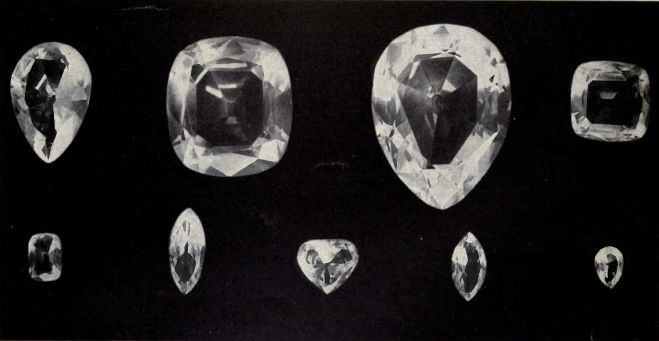
The Nine larger Cullinan cut stones

Later in February, the larger portion was again divided, and over the months until November, the rough diamond was divided again and cut and polished to produce nine large gemstones, 96 smaller stones and nine carats of uncut bort. Cullinan I was, then, by far the largest cut diamond in the world, at 516 ½ carats, (the previous largest brilliant, the Jubilee, weighs 239 carats, and the Koh-i-noor pales into an insignificant 102 ¾ carats), with Cullinan II weighing 309 3/18 carats. 

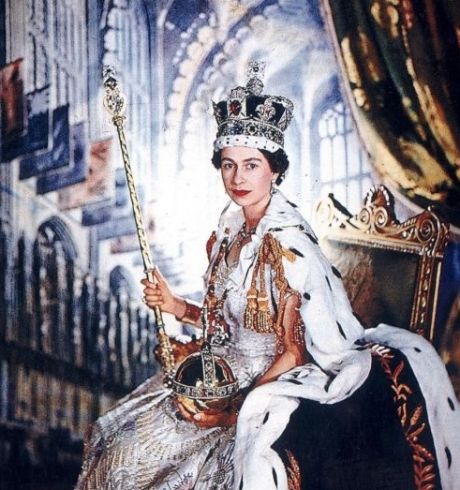
Queen Elizabeth II - Cullinan I is in the head of the Sceptre

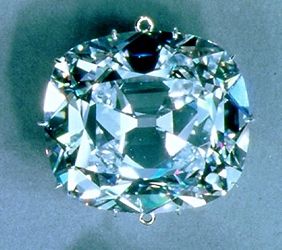
The pear-shaped, brilliant Cullinan I was placed in the Sovereign’s Sceptre, and the brilliant-cushion Cullinan II was put into the Imperial State Crown, below the Black Prince’s ruby. The other, smaller Cullinan diamonds were mounted in other pieces of royal regalia, and it is interesting to note that the four largest pieces amount to 986 carats of cut and polished jewels, taken from a rough diamond of over 3,000 carats. 

The Imperial State Crown - with Cullinan II in the front

Above a certain size, there is almost no commercial market for large gemstones, for there are few people wealthy enough to buy them, and fewer still prepared to wear something that looks like it might have been purloined from a crystal chandelier, and they can only be displayed in the context of royal regalia worn on state occasions, supplemented with hundreds, or thousands, of smaller gems. Cullinan I and II are, effectively, beyond price, as there is nothing close to matching them and certainly nothing to replace them, and they are set in the Crown Jewels, which are, again, simply priceless, but just for the sake of argument, the bidding for either stone would not open at a penny less than £200,000,000. 

Cullinan II

Not bad for something that almost got thrown out of a mine-manager’s estate-office window.

Saturday, 25 May 2013

The Horrible History of the Star-crossed Sparkler


             It is not the biggest, it is not the finest, it is not the most valuable, but it is, perhaps, the most famous diamond in the world. It is the Great Diamond of history and romance, known since antiquity and with its origins in myth, and now called the Koh-i-noor, which means ‘the Mountain of Light’. 

Koh-i-noor Diamond

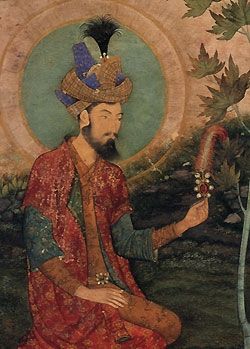
According to Hindu legend, it was worn by Carna, Rajah of Anga, a hero of the epic poem, the Mahabharata, which would give the stone a history of over four thousand years. This gem appears again in stories about Vikramditya, who flourished in the first century BCE and is said to have driven the Scythians from India. The earliest historical reference dates from 1526, in the Memoirs of Sultan Baber, where a similarly named Bikermâjit is defeated by Hûmaiûm, and Bikermâjit’s people present the conquerer with a peshkesh (tribute or present) of jewels and precious stones, amongst which was a famous diamond formerly owned by Sultan Ala-ed-din. 

Humaium

Hûmaiûm in turn presented this diamond to Baber as a peshkesh, and Baber returned the diamond to him as a present. Ala-ed-din, of the Khalji dynasty, had ruled in Hindustan and had obtained this ‘famous’ diamond in 1304, by defeating the Rajah of Malwa, (note that, although described as ‘famous’, there is no name is given to the gem). Hûmaiûm’s life was bedevilled with bad luck (he died after falling down stairs) and he was defeated in battle by Sher Shah Suri, who died from an exploding cannon barrel. Hûmaiûm’s son, Akbar, refused to remove the stone from his father’s treasury, but Akbar’s grandson, Shah Jahan, had the diamond placed in his Peacock Throne at Agra. 

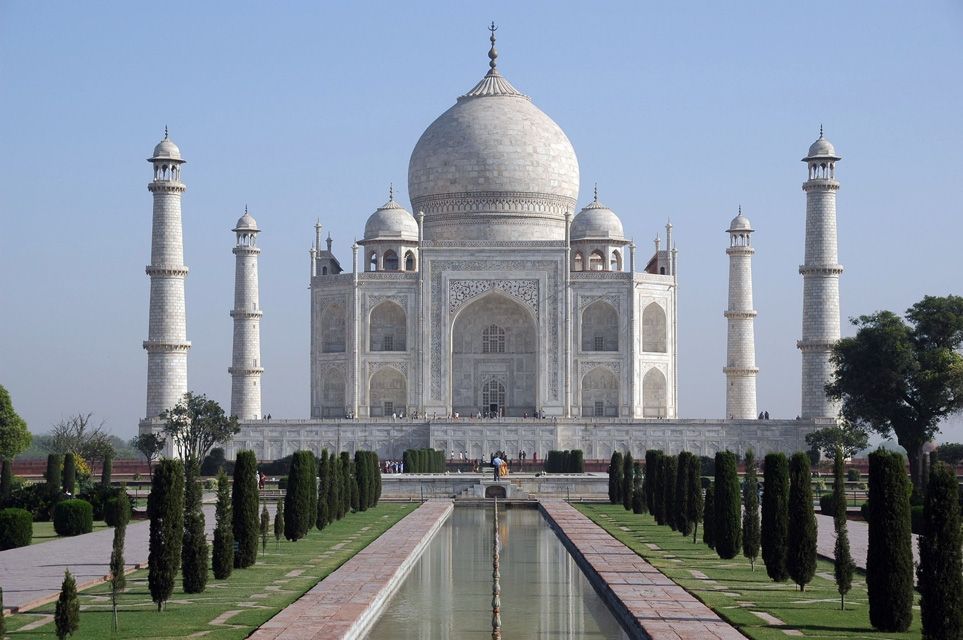
Taj Mahal

Shah Jahan’s beloved wife, Mumtaz Mahal, died during childbirth – he built the Taj Mahal to her memory – but he was overthrown by his own son, Aurangzēb, and eventually died under house arrest from face cancer. The diamond remained in the possession of the Mughal rulers until the invasion of Nadir Shah in 1739, who carried the stone back to Persia and is reputed to have first named it Koh-i-noor. Nadir Shah suffered from increasing ill-health and paranoia, he blinded his own son, whom he suspected of an assassination attempt, regretted this crime and had the officials who had witnessed the blinding executed, and was eventually assassinated by his own guards. One of his generals, Ahmed Shah Durrani, fled to Afghanistan, taking the Koh-i-noor with him, and it passed down the Durrani dynasty, until Ahmed’s grandson, Shujah Shah Durrani, was deposed and forced to flee, again taking the gem with him. 

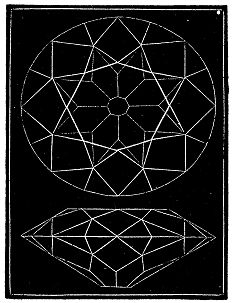
The Shape of the Original Koh-i-noor

He took refuge in India, at Lahore, with Ranjit Singh, who forced him to relinquish the gem and, in return, won back the Afghan throne for Shujah. Maharajah Ranjit Singh’s Sikh empire held massive power but his death, in 1839, created a power vacuum that was filled by the intervention of the British East India Company, and the Punjab was declared to be part of the British Empire. 

Dulip Singh

One stipulation was that the diamond known as the Koh-i-noor, taken from Shujah Shah by Ranjit Singh, should be surrendered to the Queen of England by Dulip Singh, the thirteen-year-old successor of Ranjit, and the boy was sent to England in 1850. Governor-General Dalhousie arranged for the diamond to be transferred to London, on a paddle sloop, HMS Medea, under the care of C C Mansel and John Lawrence; Lawrence put the stone in a tin box which he carried in a waistcoat pocket, on one occasion he sent the waistcoat to the laundry, forgetting about the diamond, which was returned to him by an honest steward. 

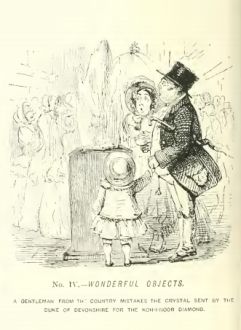
Punch - The Koh-i-noor mistaken

At Mauritius, locals threatened to fire on the Medea when the ship, on which cholera had broken out, attempted to dock; a severe storm later threatened to sink the sloop. Eventually, the Medea reached England and Lawrence took the diamond to East India House, from where it was presented to Queen Victoria by the boy Singh. It was publicly displayed at the Great Exhibition of 1851, and in 1852, under the supervision of Prince Albert, it was decided to re-cut the diamond, in the western fashion. 

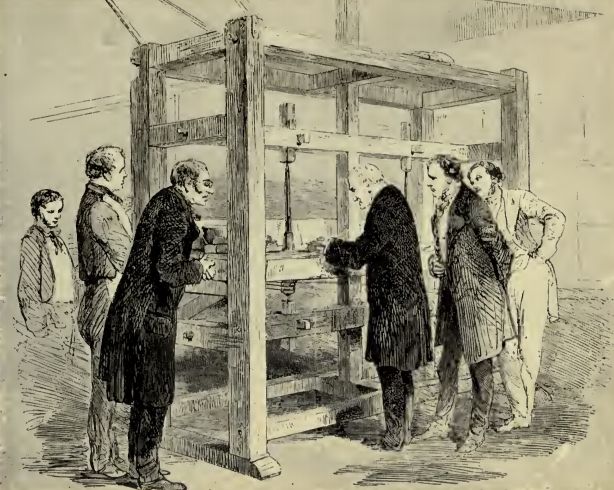
The Duke of Wellington places the Koh-i-noor in the cutting mill

The work was entrusted to Garrard’s, who employed a Dutch cutter called Voorsanger from Coster’s workshop in Amsterdam; cutting began on July 16th 1852, with the Duke of Wellington first placing the stone in the cutting mill, and work continued for thirty-eight days, at a cost of £8,000. The stone was reduced from an initial weight of slightly more than 186 carats down to 106 1/16 carats, and it was found that some parts of the stone were much harder than other parts. 

The shape of the Koh-i-noor before re-cutting

The results were disappointing – the stone was too shallow to be cut to the real proportions of the ‘brilliant’ pattern, and it was felt that too much of the gem had been removed, and that maybe a different cut should have been used. Superstition followed the Koh-i-noor, it was said to be to blame for the premature death of Prince Albert in 1861, and to be the cause of the Indian Mutiny of 1857; reputedly, only God or a woman can only wear it, and the curse has brought about the downfall of every male monarch who has worn the diamond. 

The shape of the Koh-i-noor after re-cutting

It was mounted into a brooch and worn by Queen Victoria, and then mounted into the diamond crown that Queen Alexandra wore at the coronation of Edward VII, by Queen Mary and by Queen Elizabeth, the Queen Mother. It can now be seen at the Tower of London, along with the other crown jewels.
 
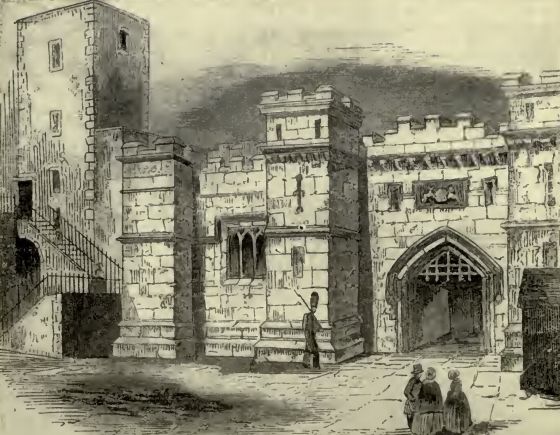
The Jewel House of the Tower of London

Friday, 24 May 2013

The Valuable Varieties of the Chemical Carbon


              Bread may well be the staff of life, but the real stuff of life is carbon. Carbon is present in every known life form on earth (it is the second most abundant element in your body, after oxygen, amounting to about 18%). What makes carbon so interesting is that exists in several forms, depending on the arrangements of the carbon atoms within a substance. 

Pencil

Graphite, for example, is carbon with the atoms connected in flat planes; it is black, opaque and soft, and is commonly found in pencils (which, despite the name, are not made of lead). Indeed, graphite gets its name from the Greek word γράφωgrapho, ‘to write’, the root of such words as graphology, autograph or biography. The atomic structure of graphite means that the soft planes can easily be deposited onto a surface like paper – imagine it like slices of bread in a sliced loaf, as each slice it taken away, it is replaced by the next, identical, slice that lay below it. The properties of graphite mean that it has a great many practical applications, from pencils, car brake linings, dry lubrication, metal casting moulds and batteries. 

Coal

In another form (or allotrope), amorphous carbon is found in coal, soot and other impure forms – carbon takes its name from the Latin carbo – meaning coal. The atomic structure of amorphous carbon can be stabilized by terminating the dangling-п bonds with hydrogen, producing hydrogenated amorphous carbon (hydrocarbons), which are found in crude oil and petroleum derivatives, certain waxes, and gases like methane, propane or ethylene. 
 
Diamond

A third allotrope of carbon occurs when the atoms are arranged in a face-centred cubic crystal structure – diamond. From the Greek αδάμας – adamas, ‘unbreakable’, diamond is known as the hardest material commonly available, it rates 10 on the Moh’s scale of mineral hardness, and is used commercially in diamond knives, saws and cutters, as well as a gemstone. 

Moh's Table of Hardness

The earliest diamonds were found in India, with a smaller number of stones discovered in Borneo, and in Brazil in 1727, with more found in Africa from 1867, the first being the Eureka diamond

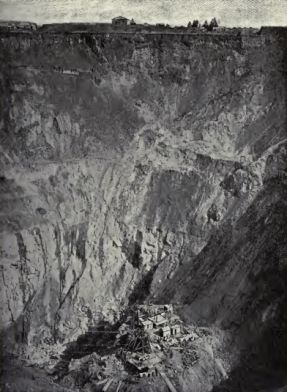
The Open Mine at Kimberley

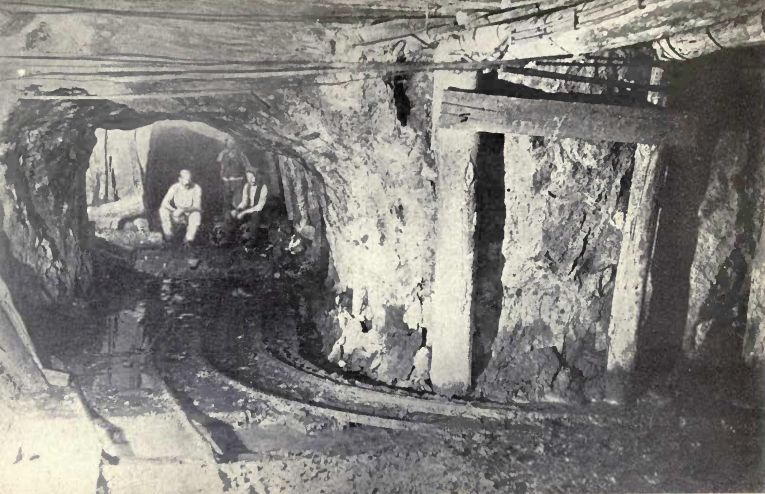
The African diamond rush began in 1870, when a 50-carat stone was found on a Jagersfontein farm, (the enterprising widow who owned this farm rented out twenty square foot plots at £2 per month). When the famous Kimberley mines were discovered in 1871, the leasing system of claims was superseded as diamond-mining companies bought up the farms. In addition to the diamond mines, rivers were also dammed, the water pumped out and the gravels dredged and sorted. 

Underground Diamond Mining

Rough diamonds are, at best, translucent and their beauty is not evident until it is released by cutting the stone. Diamond cutting was introduced into Europe from India, in 1295, and the technique was improved, almost two hundred years later, by Louis de Berguen of Bruges, who substituted polishing with corundum powder with diamond dust. 

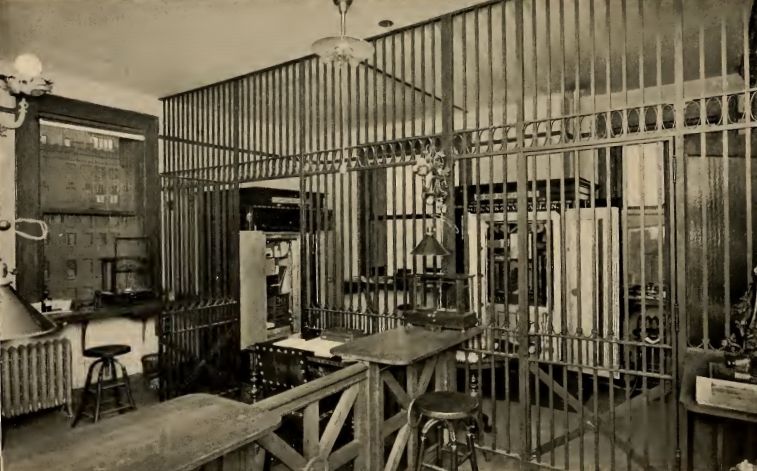
Diamond Cutting Office

In the seventeenth century, Vincenzio Peruzzi of Venice produced the first brilliant cut diamond, with thirty-three facets, or faces, above the girdle of the stone and twenty-five below. The rough stone is held in a cement or soft solder mount as each facet is cut and polished, and remounted for each individual facet, which are generally triangular or quadrangular in shape. 

Diamond Cutting

The work is carried out over a small strong box, which serves to catch the resultant abraded powder and fragments, known as bort. The process is both skilled and time-consuming, particularly before mechanical methods were developed with, for example, the Regent diamond taking two years to cut in 1712 (at a cost of £5,000) and the Koh-i-noor was recut in 1862, taking thirty-eight days, at twelve hours per day, costing £8,000 in labour. 

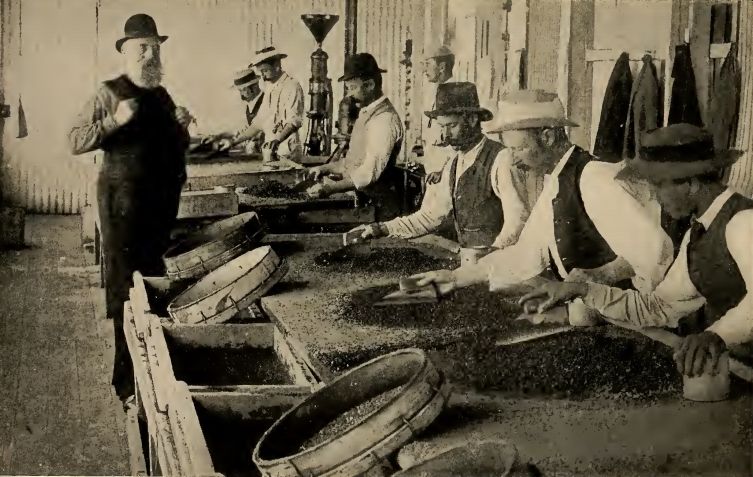
Sorting the Silt for Diamonds

Brilliant cut diamonds command the highest prices, followed by Rose cut and Table cut gems, and the colour of the stone also affects its value, with blue-white diamonds being the most valuable, followed in order by blue, red, green, white, olive, black, fire coloured and yellow. A coal black stone of 350 carats, which was so hard it was impossible to cut, was exhibited to great interest at the Great Exhibition in London, in 1851. 

Diamond Cutting

Rough diamonds are examined by experts, who use their skill to decide how the stone can best be cut with a minimum loss of size, before marking it for sawing or cleaving to remove the excess areas. The part of the stone which will provide the table is then decided on, this is the largest facet of the diamond, usually situated on the top of the stone, and the facets surrounding the table are then cut away, in a process called bruiting

Diamond Polishing

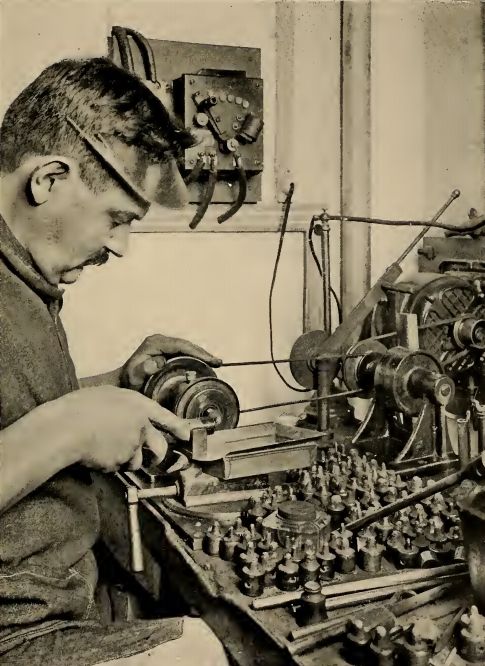
The diamond is then polished, on a wheel, using a combination of diamond dust and oil, until the required finish is achieved. There is no such thing as a ‘perfect’ diamond, as they all contain minor imperfections, called flaws or feathers, caused by intruding carbon atoms or minute cracks, but for practical purposes, ‘perfect’ stones are those that lack any flaws or spots that can be seen by a person with ordinary sight using a watchmaker’s magnifying glass. 

Diamond Cutting Tools

The value of a diamond is said, popularly, to rest on the Four Cs – colour, clarity, cut and carat. The carat is the weight of the stone, set in 1907 as the metric carat of 200 mg of mass, but formerly four grains Troy weight, later set at just below four grains, the name thought to come either from the Italian caratáre – to weigh with great care, or the French caret – it is wanting, in reference to the tiny margin below the four grain measure. 
There is little evidence that folk etymology of the name being derived from kuara, meaning a carob bean, is the true origin of the term. The price per carat per stone is not linear, as larger stones are rarer and thus demand a higher price per carat as the carat mass increases, and prices are also affected by the demand for certain carat weight stones used in jewellery manufacture.

Tomorrow – A Famous Diamond.