Tuesday, 25 December 2012

The Disconcerting Dating of the Christmas Celebrations


               There are puritans (with a small ‘P’) who will tell you that ‘Xmas’ is all wrong and you shouldn’t use it. Puritans aren’t always right. Xmas has a very long and distinguished history. From the earliest times, the first letter of Χριςτος – the Greek form of Christos, has been used as an abbreviation for Christ, with Χmas as an alternative to Christmas. An Old English chronicle, dated 1021, containes the words, “On Xpes mæsse uhtan” (‘On Christ’s mass dawning’) and John Wyclif, in a sermon for New Year’s Day dating from about 1380, says of the mystical word VIX, 
For in þis word VIX ben but þree lettris, V, and I, and X. And V bitokeneþ fyve; I bitokeneþ Jesus; and X bitokeneþ Crist. (i.e. X betokens Christ)” 
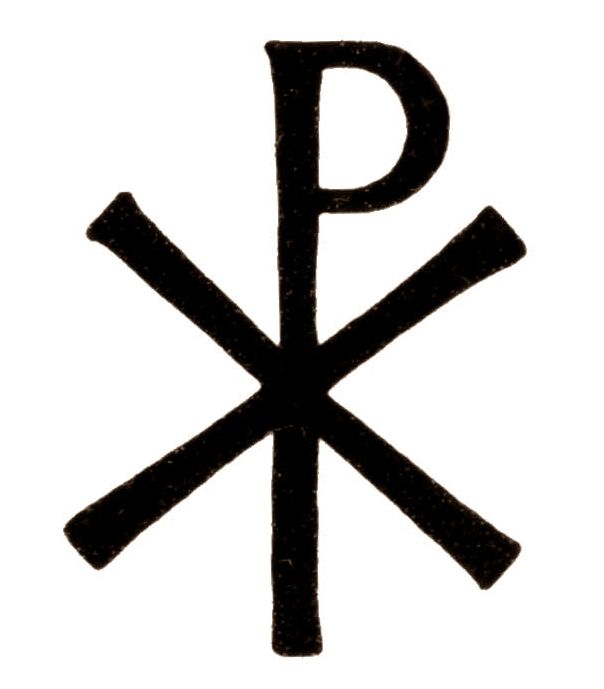

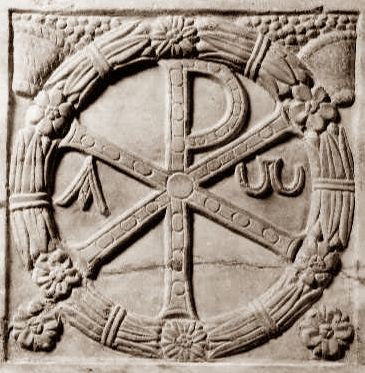
The Chi-Rho

The use of the first two letters of the Greek word for Christ were used in the Chi-Rho symbol, which stood as a secret sign for the early Christians and conveniently looked a little like a cross too. In fact, the name of the festival was Dies Natalis Domini (The day of the birth of the Lord) or, more fully, Festum Nativitatis Domini Nostri Jesu Christi (The feast of the day of the birth of Our Lord Jesus Christ), because the early Catholic Church used Latin as their official language and it wasn’t until the tenth or eleventh century that the English began to use Christ’s Mass, which was conflated into such words as Christenmass, kryst-masse, cristmasse, crystmasse, Chrysmas, and Cristmas, and it wasn’t until the seventeenth century that this was standardised as Christmas, so, if anything, Xmas is more ‘authentic’ than Christmas

Another Chi-Rho

These early Christians did not really celebrate Christmas but in the Constitutions of the Holy Apostles, which date from 375 to 380 CE, Book V Section III, On Feast Days and Fast Days, has, 
Brethren, observe the festival days; and first of all the birthday which you are to celebrate on the twenty-fifth of the ninth month; after which let the Epiphany be to you the most honoured, in which the Lord made to you a display of His own Godhead, and let it take place on the sixth of the tenth month.” 
From this, we see that the ‘most honoured’ feast day was that of the Epiphany, celebrated on January 6th, and there were advocates for dates other than December 25th, with various dates put forward for various reasons, but after St Chrysostom (d. 407 CE) the Eastern and Western churches recognised December 25th as the Feast of the Nativity (although the Armenian Church still uses January 6th, with those members of the Armenian Orthodox Church in the Holy Land that still use the Julian calendar opting for January 19th). 
Figuring things out

Using a slightly more convoluted logic, some commentators reasoned that since God started creating everything by dividing the light and the dark, it made sense that he must have done this on the Spring equinox, when the day and the night are of equal length. Furthermore, it also made sense that since his son was the Light of the World, he would also have been conceived at the Spring equinox, and the Feast of the Annunciation was March 25th so it made sense that he would have been born nine months later, on December 25th. Obvious, when you think it through. 
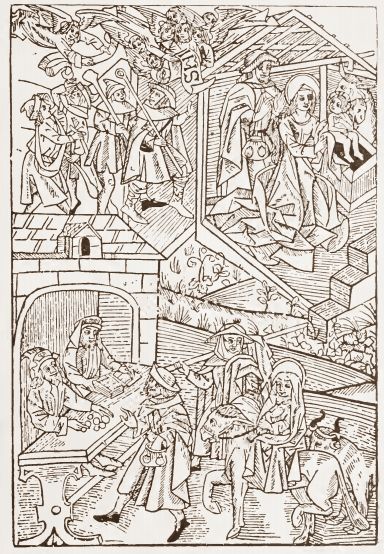
The Nativity

If the date is uncertain, then so too is the year; once again, there are any number of theories, with Dionysus Exiguus settling on the Anno Domini mode of reckoning in his Cyclus Paschalis, a treatise for computing the correct date for Easter, which placed the year of the birth of Christ, (1 AD) in the Year of Rome 753 (Anno Urbis Conditae). Due to an oversight, Dionysus got his sums wrong and was out by approximately 4 years, so that the real date of the Nativity would be at some time between 6 and 4 BCE. It made sense for the early Christians to place their celebration at around the same time as the Roman feasts of Saturnalia and the Kalends (their New Year), and the related festival celebrating the birth of the god, Mithras. 

Bas-relief of Mithras found at York

Roman soldiers stationed in Persia during the first century encountered a minor sun god called Mithra or Mitra and they took the new religion first back to Rome and then they spread it throughout the Roman Empire as they were stationed abroad. Mithraism was a mystery religion and only men were initiated into its secrets, so our knowledge is necessarily limited, but there are some interesting parallels with another emerging religion of the time. The priests of Mithras were the Magi, whom we have already met as the Three Kings. Mithras was born in a cave to a Virgin on December 25th and was the Light of the World, the Sun, whose day, Sunday, was the Sabbath. He performed miracles, including walking on water, and had twelve disciples, who followed him and were represented by the twelve signs of the zodiac. Mithras was killed and rose again after three days, during which time he descended into the underworld, and then ascended in Heaven, from where he will return at the end of the world. His followers celebrated with a special communal meal, where the food was Mithras’s flesh and blood, they progressed through seven sacraments during their lifetimes and he was known to them as ‘Saviour’, ‘Son of God’, ‘Redeemer’ and ‘Lamb of God’. 
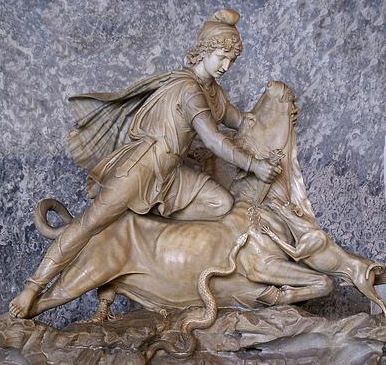
Mithras slays a bull

This much we know. Classical authors refer to contemporary writings about the Mithras cult that have since been lost, and some of what we do have is from Christian polemicists, who sought to portray the ritualistic elements in an unsavoury manner. We know that the Roman Mithras differed from the Indo-European Mitra of the Rig-Veda, and although popular amongst the military, was revered by no more than about 1% of the population of the Roman Empire. Religions, cults and sects washed in and out of Rome from all corners of the Empire, from Britain, Gaul, Iberia, Africa, Egypt, Greece, Persia, India and beyond, and were mixed together, drawing and feeding on each other. It is no surprise then that there are so many common threads and parallels. It’s a fascinating subject. 
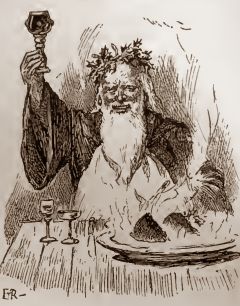
Wæs hæl. Drinc hæl.

So may your god, whoever or whatever you conceive he/she/it to be, if at all, be with you at this time of the year. Wæs hæl. Drinc hæl.

Monday, 24 December 2012

The Batty Beliefs of the Absurd Astrologers


                 It doesn’t matter how batty the idea really is. Before long, someone, somewhere, will say, “You know, that guy has a point.” And then someone else will join in and before you know it, the batty idea stops being batty and becomes ‘The Truth™’ and believers in ‘The Truth™’ get all offended and shouty when you point out that ‘The Truth™’ is, now that you mention it, a batty idea that simply got out of hand. 


Take astrology. Once upon a time, somebody, somewhere, said, “You know, that guy has a point with what he says about the stars and stuff,” and somebody else said, “I think you might be right,” and before you knew it, the crazies were running the asylum and telling folk that they knew what was going to happen before it happened, because they had read it in the stars. They didn’t know much about the actual stars themselves but they knew quite a bit about human nature and they used that knowledge to get themselves cushy jobs, sitting down, inside and with no heavy lifting, and started giving advice to the muscley big blokes with the stabby swords who were in charge, and they, being hard of thinking, took whatever the astrologers told them as read and got all stabby when anyone pointed out that it might all be a bit of a batty idea after all. 

In the past, all over the place, quite a lot of muscley big blokes thought there was something in this ‘rocks in the sky™’ business and the astrologers got increasingly cushier jobs and their batty ideas got increasingly battier. There came a time when you couldn’t throw a stick into the street without hitting an astrologer, and this was especially true when the Romans were the big muscley blokes with the stabby swords running Judea. The astrologers said that the ‘rocks in the sky™’ had told them that umpteen of the prophecies in the Holy Books were about to come true and there was going to be a New King born pretty soon, and an especially shiny new ‘rock in the sky™’ proved all this. This shiny new rock (aka The Star of Bethlehem) in mentioned in Matthew’s gospel, where we are also introduced the Magi, an unnamed, unnumbered band of astrologers from the East, who followed the Star to Judea where it led them to the birthplace of the New King. 

Matthew is pretty vague about the Star and Luke, the other gospel writer who covers the Nativity story, doesn’t mention it at all. Nevertheless, the Star has become an important symbol of Christmas and over the years there have been numerous attempts to explain exactly what it was. Some have said that it was a comet that moved across the sky, but comets were usually felt to be inauspicious portents so it is unlikely that one would herald the welcome birth of a New King. One explanation is that it was a nova, an old star burning itself out, and Chinese astronomers recorded just such a nova that happened in 5 BCE. 


The first person to speculate on the real nature of the Star was the German astronomer Johannes Kepler, who calculated that it could have been a conjunction of the planets Mars, Jupiter and Saturn, which occurred in 6 BCE. Triple conjunctions occur when three planets approach each other closely in the night sky, and are relatively rare, so it is a possibility. There were other conjunctions that would have been observable from Judea at around about the same time – in 7 BCE, Jupiter and Saturn drew close on three occasions (May 22nd, October 5th and December 1st), and on August 12th 3 BCE, Jupiter and Venus came into close conjunction. In 2 BCE, on June 17th, Jupiter and Venus actually overlapped, an event called an occultation, and that would certainly have interested the Magi. 


Occultations are when two planets pass across each other and are astonishingly rare occurrences – the last occultation seen from Earth happened on January 3rd 1818, and the next will not take place until November 22nd 2065, (both involving Venus and Jupiter). Without modern optical telescopes, the occultation would have looked like a single, bright star when seen from the Earth. Both of the gospel writers (Matthew and Luke) agree that Jesus was born during the reign of Herod but historians are at odds on the year of Herod’s death. Most agree he died in 4 BCE, which rules out the occultation mentioned earlier as the phenomenon of the Star of Bethlehem, but some others have dated his death to 1 BCE, which allows for the occultation to be considered as a possibility, at least. 


Of course, we are talking about a big rock and a ball of gas that look like they overlap in the sky, in spite of them being millions of miles apart, and assigning some significance to this, which is a batty idea. Some religious folks seek to explain the Christmas Star away as a purely symbolic thing, with some going so far as to fall back on that old chestnut of ‘Goddidit’ and you can’t counter blind faith of that sort with any kind of logic. 


Maybe we’ll never be certain what the Christmas Star was, but it is a great image that has become central to our Christmas celebrations, finding its way onto uncountable cards, umpteen decorations and the tops of innumerable Christmas trees. And if it symbolises anything that promotes peace, love and goodwill to all men, then maybe that’s not such a batty idea.

Sunday, 23 December 2012

The Hedonistic History of the Interesting Ivy


Nay, Ivy, nay; it shall not be i-wys ;
Let Holly hafe the maystery, as the manner is.
Holly stond in the Halle fayre to behold;
Ivy stond without the dore; she is full sore acold.
Holly and his merry men they dancyn and they sing.
Ivy and hur maidens they wepyn and they wryng.
Ballad from the time of Henry VI

          If the early Christians found the holly easy to assimilate into their iconography, ivy was an all-together different matter. The old pagans had seen holly and ivy as representative of the male and female principles, as they did with the robin and the wren; they were a pairing that naturally went together. Holly had sufficient attributes that matched the Christian story – the spiny leaves were reminiscent of the crown of thorns, the scarlet berries were obviously the drops of blood shed during the Passion, the white flowers symbolised purity, and being evergreen echoed everlasting life. 

Ivy

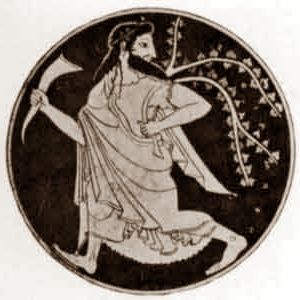
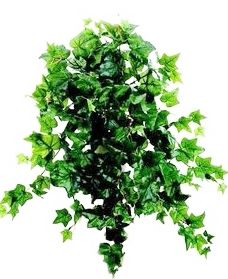
Ivy was different. The early church fathers were not too enthusiastic about women to begin with, so the feminine aspects of ivy didn’t sit too well with them, but ivy had other connotations too. In Classical times, ivy was sacred to the gods of wine, the Greek Dionysus and the Roman Bacchus (Kissos, the Greek for ivy, was the original name of the infant Bacchus), and that is where the trouble started. Wine was central to the Christian rites but was also central to the rites of Dionysus, and the parallels didn’t stop there. 

Dionysus and Ivy

The legends of Dionysus tell of a young god of epiphanies who arrives from another world, born of a divine father and a mortal mother, who is killed but returns to life, who descends into Hades but also returns, who is celebrated in a ritual meal of bread and wine. 

Maenad

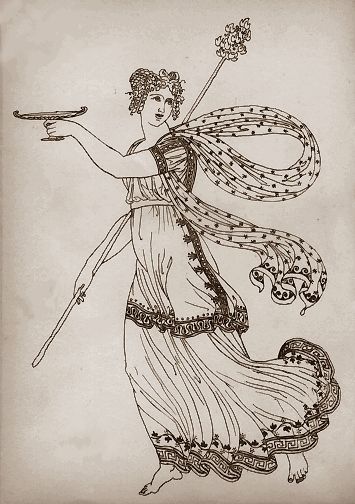
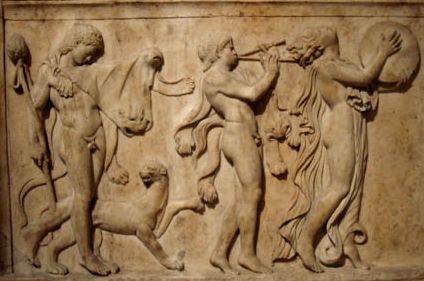
However, Dionysus was also the god of revels, of madness and chaos; his followers, the maenads, are dangerous women who tear men and animals into pieces with their bare hands in their uncontrolled, ecstatic, possessed state, they sing and dance wildly, and engage in unrestrained sexual activity. On their heads, they wear wreathes of ivy and Dionysus himself carries a staff of ivy-wood, the thyrsus, wrapped with ivy leaves and tipped by a pine cone, which drips honey and is a beneficent wand although it can also be used as a weapon. 

Dionysus with thyrsus and Maenad

Not really the sort of things that the bishops sought to be associated with. And, in classical times, ivy was used as the sign of the tavern; a large bush was hung above the door of alehouses, although, as Rosalind says in As You Like It, ‘Good wine needs no bush’. The antiquary John Aubrey refers to this in the line, “The Tavern-bush is dress't with Ivy, which is derived from that of Bacchus”; again not the sort of places that good, sober Christians might frequent. 

Ivy Bush

The early church councils, particularly those held at Braga, forbade Christians to decorate their homes and churches with evergreen foliage, and the Elizabethan Puritan William Prynne disapproved of the practice,
At Christmas men do always Ivy get,
And in each corner of the house it set;
But why do they then use that Bacchus-weed?
Because they mean, then, Bacchus-like to feed.” 
 There was a common belief that drinking wine from a cup made from the wood of the ivy would keep the drinker sober, or ivy berries added to wine would do the same and some believed that an ivy goblet had the ability to separate a mixture of wine and water. Water drunk from an ivy-cup was a sure cure for hooping-cough in children. It has to be said that ivy, like holly, is poisonous and should never be taken internally. 

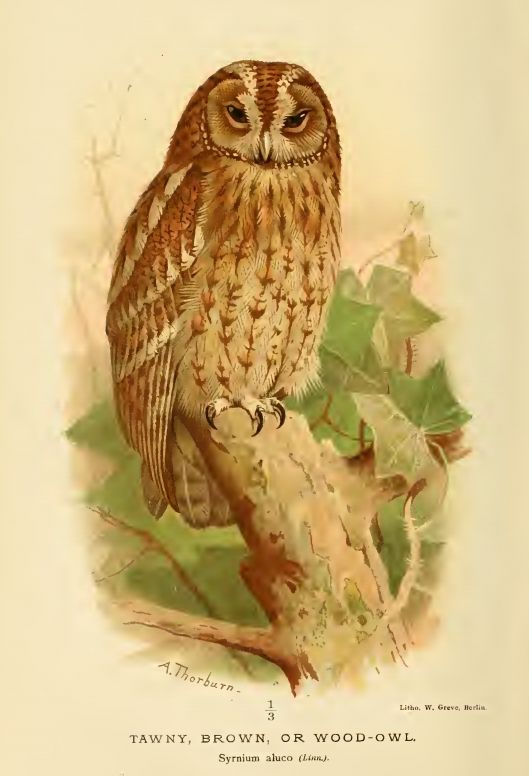
Owl with Ivy

In the ballad quoted at the beginning of this post are also these lines,  
“Good Ivy what byrdys hast thou ? 
Non but the owlet that kreye how! how!”  
The cry of the owlet was taken to be an omen of approaching death, and ivy was a funeral plant. The weeping ivy on the Yule log, like the weeping mothers of Modranicht, mourn the death of the year, and in the language of flowers ivy represented steadfastness, seen again in the mourning mothers lamenting the passing of their loved, lost children. Ivy was placed in the wreath that adorned the boar’s head at the Yule feast and a sprig of another funereal herb, rosemary, was stuck into the apple in the boar’s mouth.

Saturday, 22 December 2012

The Fabulous Fables of the Holiday Holly


The Holly and the Ivy,

Now both are full well grown,

Of all the trees that are in the wood,

The Holly bears the crown.


                    An ancient belief is that the Holly is the King of the Trees, as Holly is a masculine principle (Ivy, the female principle, is its Queen). In ancient Rome, holly was sacred to Saturn and was used to celebrate Saturnalia, the mid-winter feast in his honour, when the Romans brought boughs of holly into their homes as decorations. 


In the pagan north, celebrants also brought holly boughs and other evergreens to their sacred groves, to replace the foliage lost during autumn and to mark their places of worship. In his Sylva Florifera (1823), Henry Phillips tells us that the early Christians followed this custom, drawing suspicion away from themselves by also decking their meeting places with evergreens during the winter festivals. A folk-etymology reassured their delicate sensibilities by equating ‘holly’ with ‘holy’, and they found satisfying associations with the holly’s prickles and Christ’s crown of thorns, the white flowers with purity and the red berries with his blood, whilst the evergreen nature of the plant handily symbolised eternal life. 


In fact, ‘holly’ derives from Old English ‘hollin’, ‘holin’ and ‘holme’, which in turn come from the Anglo-Saxon ‘holegn’ and Norse ‘hulf’.’ Holly has male and female trees but the difference has nothing to do with the thorny leaves – after a holly tree grows above about ten feet, the leaves will be smooth as there is no need for protection from browsing animals above that height. Another alternative view is that only young leaves are smooth and develop spikes as they age, and pollarded hollies would provide smooth-leaved feed as holly was once cut as fodder for domestic animals in the past. An old Yorkshire Mummer’s song, Lyarde, contains the following lines,

Lyarde is ane olde horse, and  may noght wele drawe,

He salle be putt into the parke holyne for to gnawe.

Hollin is a common place-name in northern England, which may well reflect the practice of growing holly as winter fodder, (as well as its use as an excellent hedging plant). I’ve mentioned before the practice of slaughtering animals prior to winter but, obviously, they couldn’t all be killed as that would result in the lack of livestock in the following spring and so some had to be fed through the winter. The evergreen holly was the ideal solution and was used until improved agricultural techniques in the eighteenth century provided alternatives (root crops such as turnip, and better quality silage). 

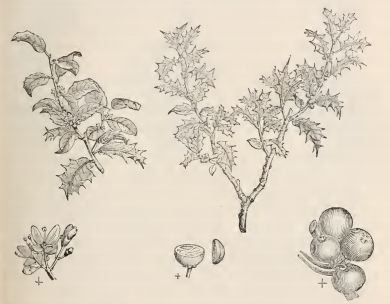
Holly - Gerarde's Herbal - 1597

Old country lore says that if prickly holly is the first brought into the home then the husband will rule for the next year but if smooth holly is the first, then the wife will dominate the household throughout the year; for the maximum good luck, three types of holly should be used to decorate the home – prickly, smooth and variegated (which, in legend, is marked by drops of Mary’s milk, which spilled onto the holly boughs brought to the nativity by the shepherds). Holly berries contain the alkaloid theobromine, making them dangerously poisonous – if holly is used as a decoration, the berries must be out of the reach of children and pets. The wood of the holly is very white, almost like ivory, and extremely hard, it is easily dyed and when dyed black was used in the past as a substitute for ebony, used for such things as teapot knobs. 


Another tradition is that the Little People will seek to join in with the revels and that the holly gives them a place to hide unseen, whilst the holly prevents them from doing any harm. Holly and rowan branches were hung outside stable doors to prevent the nightmare from entering. The Gentleman’s Magazine of 1779 records that an observer saw a ‘sport’ at an unnamed ‘obscure’ village in Kent, where on a Shrove Tuesday the young girls aged between five to eighteen were burning a ‘Holly-Boy’, an effigy made from holly that the girls had stolen from the boys. Elsewhere in the village, the boys were burning the ‘Ivy-Girl’, which they had taken from the girls. Enquires revealed that this custom had taken place for as long as any villager could remember, but no one could explain the significance of this. 

Holly - J C Loudon - Arboretum et Fruticetum Britannicum

Holly and the other evergreens should be removed from the house on Twelfth Night (January 6th), with the exception of mistletoe, which should remain in place until Candlemas (February 2nd). The mistletoe should be retained throughout the year as it will protect the house from fire and lightning strike, and the other evergreens should be carefully disposed of, with due respect, either by burning or by being fed to the livestock, with attention paid to remove every single leaf and berry, as a goblin will come for each that is left behind. Robert Herrick refers to this in this poem,

“DOWN with the Rosemary, and so

Down with the Baies & misletoe:

Down with the Holly, Ivie, all,

Wherewith ye drest the Christmas Hall:

That so the superstitious find

No one least Branch there left behind:

For look, how any leaves there be

Neglected there (maids trust to me)

So many Goblins you shall see.”


Friday, 21 December 2012

The Merciless Murder of the Wretched Wren


             One of the strangest, and cruellest, of the Christmas customs was the Hunting of the Wren. The wren is one of our smallest birds and is traditionally said to be the King of the Birds; the birds met together and decided that the bird that could fly the highest would become their King. The Eagle soared above all the rest but when he reached his limit and began to tire, the Wren emerged from hiding in the Eagle’s tail feathers and flew above him, declaring himself to be King and proving that brains are superior to brute strength. 


This tradition as the wren being called the King of the Birds is common across all European languages. In Greek it is Βασιλίσκος (little king), in Spanish reyzuelo (a diminutive of rey – king), in Italian reatino, in Swedish kungs-fogel – King’s fowl, in Danish fugle-konge - fowl king, in German zaun-könig – hedge-king, in Dutch winter-koninkjc – little Winter-king, and in Welsh bren – King. The bird was held in great reverence in all cultures and to harm the wren invited the worst of bad luck. 
He that hurts Robin and the Wren, 
Will never prosper, boy or man.” 


Given this enormous respect for the bird, it is surprising that a tradition began in which the wren was hunted and killed at Christmastide. There are numerous theories why the Hunt began; some say that it related to the transgressions allowed during the reign of the King of Misrule that are forbidden during the rest of the year. Others think that the early Christian missionaries took exception to the reverence accorded the wren by the Druids and commanded that it be hunted to spite their opponents and to symbolise the ‘killing’ of their pagan practices. 

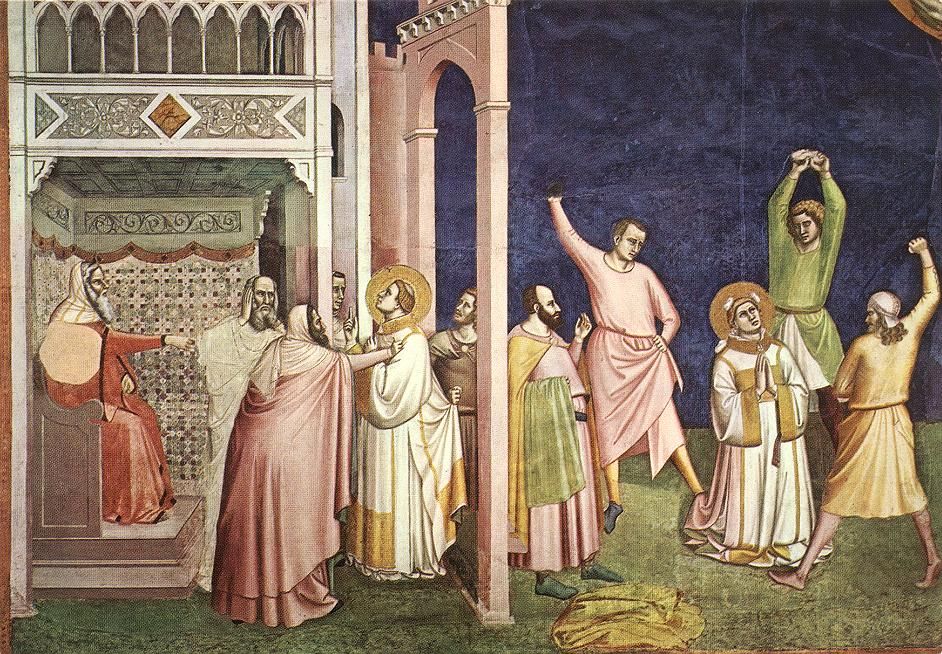
B Daddi - The Martyrdom of St Stephen

Another view is that the first Christian martyr, St Stephen, was betrayed by the song of the wren, which gave away his hiding place and the bird was hunted in revenge on his feast day, December 26th. Yet another version is that St Stephen ‘took over’ the customs associated with the Norse god Freyr and the hunting is related to Yule myths associated with him, with the murder of the King of the Birds related to the killing of the year and the death of the Year King. We will never know. 

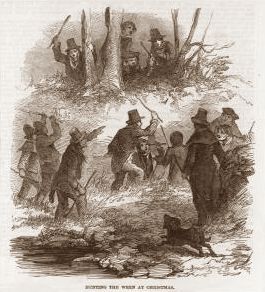
Hunting the Wren at Christmas

But, usually on the morning of St Stephen’s Day, groups of men or boys would seek out the wren and ultimately kill one, which would then be carried in procession and buried with great ceremony. The wren would be stoned to death, echoing the form of Stephen’s martyrdom, or killed with sticks or even shot with firearms. In variations, the bird was taken alive, maimed and fixed by the leg to two rings overlapping at right angles, on the end of a pole, whilst boys sang, 
The wran, the wran, the King of all birds, 
St. Stephen's Day was caught in the furze: 
Come, give us a bumper, or give us a cake, 
Or give us a copper, for Charity's sake.” 

Walter Crane - Hunting the Wren

On the Isle of Man, a feather from the wren was given in return for a donation, and this would bring luck for the following year. In Scotland, the wren was hunted on New Year’s Day, caught alive and decorated with ribbons before being released, in a custom called the ‘Deckan of the Wren’. 

The Peasants Revolt 1381

An English folk-song, The Cutty Wren, dating from at least 1776, relates the story of the hunting and dismemberment of a wren, and some have associated this song to the Peasant’s Revolt of 1381, with the wren being a symbol for King Richard II, but this is a very suspect notion. Thankfully, Hunting the Wren has now died out, although the ceremony remains in some locations, where a proxy, imitation bird is displayed instead, amidst dancing, music and fancy costumes.


Thursday, 20 December 2012

The Revelling Relics of the Boar's Bonce


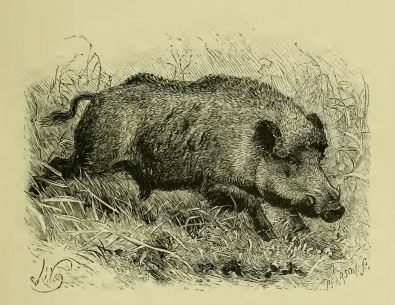
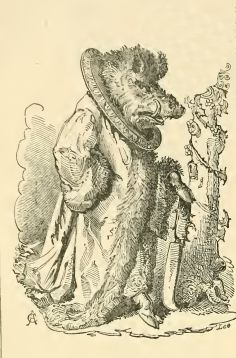
                      If you imagine that a wild boar is anything like your average farmyard porker, you might like to revise your opinions. A male boar may look like a grunting piggly-wiggly, but standing at about three feet at the shoulder, weighing in at about 150 lbs, it is a wedge of pure muscle, covered in thick bristles, with four tusks set into a skull of solid bone, which it carries on shoulders of tremendous strength. It is a bad-tempered, vicious hulk of spite and fury. 

Wild Boar

Male boars are normally solitary creatures and, like any wild animal, it will habitually avoid contact with humans but if cornered or surprised it will stand its ground. Sometimes it will feint and break off its charge but sometimes it will carry through and attack. It will hurl itself forward, with foaming jaws and head held low and when it makes contact it will suddenly arch its head upwards, its curved tusks ripping into anything they encounter. 

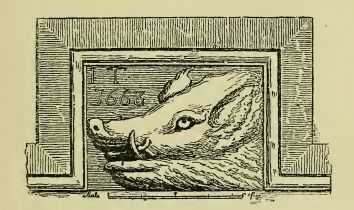
Boar's Head with tusks

The tusks are crescent shaped, about six to eight inches long and by wearing against each other have razor sharp edges. Because of the height of the boar, the most common area of goring a man is in the upper thighs and lower trunk, and the weight and momentum of a charge can easily kill a man. Just to give you some idea of their savagery, it is said that hungry tigers will avoid attacking an adult male boar; if tigers are afraid of them, I suggest that you should be too. 

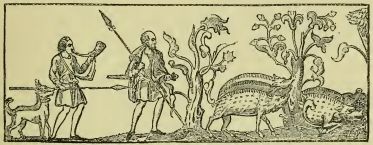
Boar Hunting

We know from inscriptions on their altars that the Romans in Britain hunted wild boar. William I passed a forest law in 1087 that anyone found guilty of killing a stag, a roebuck or a wild boar should have his eyes put out. Henry I loved hunting boar, which he called ‘a verie dangerous exercise’, and a boar was the badge of Edward III. When James I visited Hoghton Tower in 1617, he was more than once served ‘wild boar pye’; (there is still a Boars Head pub at Hoghton, and a very good one it is, too). 

More Boar

An entry in an account book dated 1683 mentions payment made for a wild swine, indicating that boars were still running wild at that time. Boars were finally hunted to extinction in Britain but they have been reintroduced latterly, with their numbers supplemented by escapees from commercial boar farms, and if you know where to look, are reasonably easy to find today. 

The Boar's Head

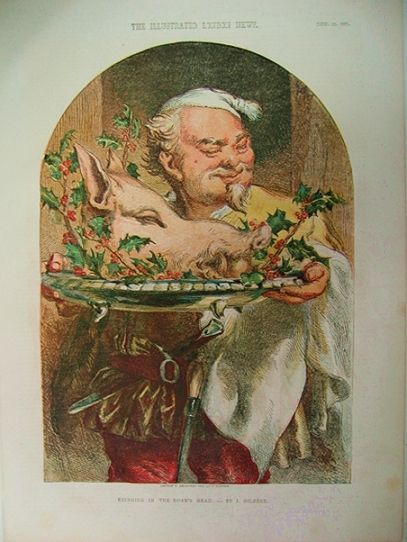
One of the most ancient of all the ancient Christmas traditions is the feast of the Boar’s Head. The Scandinavians revered boars and they brought their customs to Britain as they settled in the north.  Boars were sacred to the fertility god Freyr and were an integral part of the old Yule festivities. In the Norse myths, the sun is Freyr riding his golden boar, Gullinbursti, across the skies. Eating pork was a common part of their diet and especial regard was given to the meat of the wild boars, not least because of the danger and prestige involved in hunting the formidable beasts. 

German Boar Spear

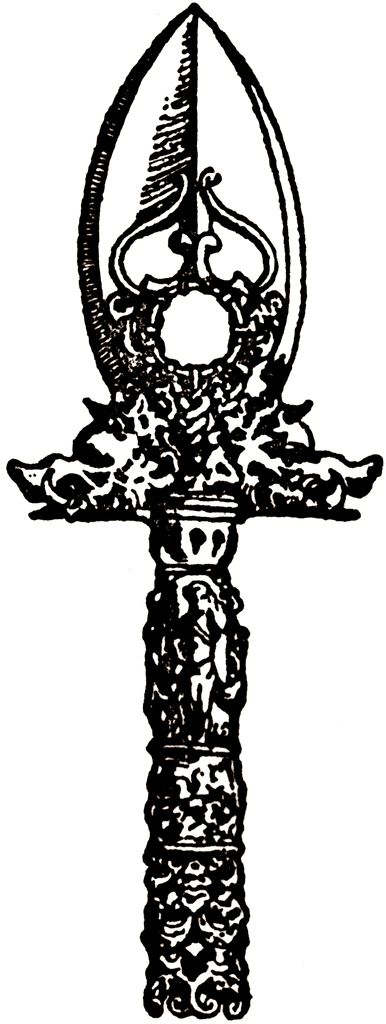
Boars were hunted by flushing them out with dogs, called raches or ratchet-hounds, and facing them down with boar-spears, which were broad-headed lances that had a cross-bar behind the head, to prevent the body of the boar from running down the length of the shaft and reaching the man at the other end, such was the force of the charge of the creature. If the common man began his Christmas fare with plum porridge, the Lord of the Manor began his dinner with the ceremony of the Boar’s Head. 

Boar's skull

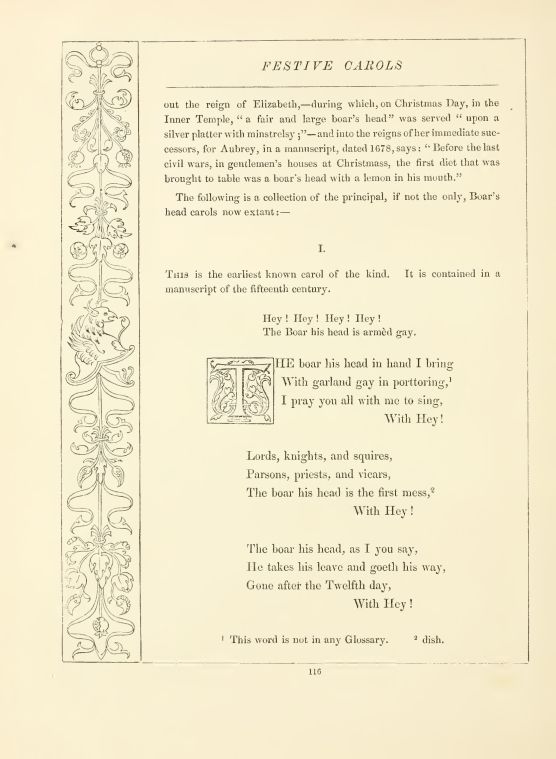
Amidst great pomp, the Head with an apple in its mouth would be brought into the Hall on a gold or silver platter, accompanied by servants and members of the household and very often by the hunter who had killed the boar. Minstrels played, and one of the oldest Christmas carols is the Boar’s Head Carol, the most widespread version of which dates from Wynkyn de Worde’s printed book Christmasse Carolles of 1521. 

The Boar's Head Carol

The custom the Boar’s Head continues at Queen’s College, Oxford, where it has been performed since the fourteenth century. The Head is borne in by four men, preceded by a solo singer who sings the verses and followed by the choir, who sing the chorus, and the platter is brought to the table of the Provost, who serves slices first to the High Table and then to the rest of the tables. 

The Lord Boar

The apple (or sometimes orange or lemon) in the mouth of the Head was stuck with a sprig of rosemary, which was once a popular Christmas decoration, symbolising remembrance (Shakespeare refers to it in Hamlet, where Ophelia says, “There's Rosemary for you, that's for remembrance; pray you, love, remember.”). It was used in funeral wreathes but was also used in marriage celebrations (Anne of Cleves wore sprigs of rosemary in her hair at her marriage to Henry VIII). The name of the herb has connotations with Mary, Christ’s mother, one of who’s symbols was the Rose, although the name comes from rosmarinus – ‘dew of the sea’ – and there is a legend that the rosemary bush hid the Holy Family from Herod’s soldiers in their Flight into Egypt. Rosemary was included in Christmas garlands, together with holly, ivy, bay laurel and mistletoe

Thomas Bewick - Wild Boar

The first verse and the chorus are:

 Solo: The boar’s head in hand bear I

Bedecked with bays and rosemary

I pray you, my masters, be merry

Quot estis in convivio (So many as are in the feast)

Chorus: Caput apri defero, Reddens laudes domino

(The boar’s head I bring, giving praises to God)

There are other versions of this carol but all follow roughly the same form.


Another version of the Boar's Head Carol


There is a legend at Oxford that an undergraduate, Copcot, was walking in the woods of Shotover when he surprised a boar. The boar charged Copcot, who had only his copy of Aristotle to protect himself, so he thrust the book into the boar’s mouth with the words ‘Græcum est’ (roughly, ‘It’s all Greek to me’) and the animal choked to death on the indigestible tome. Copcot beheaded the dead beast to retrieve his book and carried both back to his college, where the head was served up at a feast and a tradition was born.


Wednesday, 19 December 2012

The Sweetening Saga of the Mince Meat


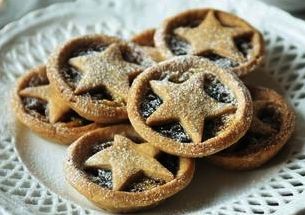
                Hand in hand with Christmas Pudding comes Christmas pie. These are usually known as Mince Pies, although some modern folk find it strange that a pie containing no minced meat can be called a mince pie. There are two reasons for this. In the past, ‘meat’ was a term for any food, by which meaning we still use it in such phrases as, ‘It’s all meat and drink to me’. The other reason is that, in the past, mince pies did contain meat (and some still do, if you count beef suet as meat – it is animal fat, after all). 

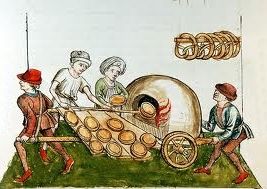
Pyes in the Oven

As winter approached and animal feed grew scarcer, it was common to slaughter livestock towards the end of the year, eliminating the need to feed them through the winter months. However, preserving meat in the past was not a simple process; some meat could be smoked, some preserved in brine or salted, some could be cured in other ways or dried, and some could be preserved in sugars. This meant either in fruit sugars or honey, and various methods were employed. 

More pyes in the oven

Some included using spices to flavour the meat but this was not a method of disguising the taste of meat that was past its best. I’ve mentioned this before, but it’s such a widespread myth that I’ll say it again. In the past, spices were phenomenally expensive, often worth more than their weight in gold. They had to be imported from the East, either overland via the Middle Eastern merchants or by sea, in sailing ships that had to risk sailing around the southern capes. If you could afford spices, you would not waste them on ropy meat. Spices were a conspicuous display of your wealth and were used to impress your friends and neighbours. They were not used to cover up the taste of bad meat. 

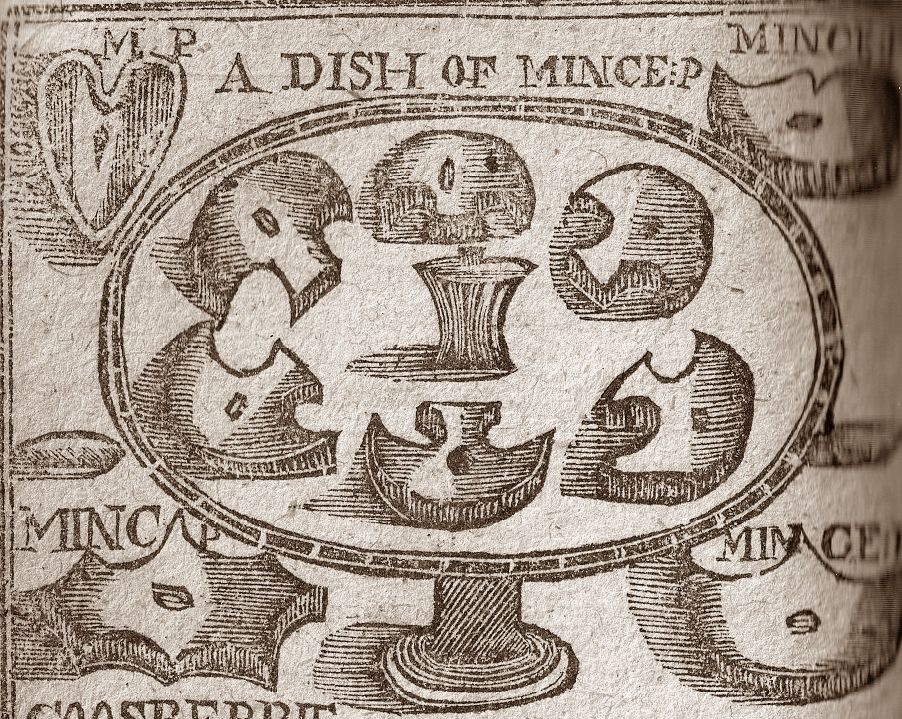
Mince Pyes

I have also mentioned that mixing meat and fruit may sound odd, but it has a long history. We happily put pineapple in sweet and sour dishes, serve roast pork with apple sauce, turkey with cranberries, duck with orange, lamb with apricots and so forth. The fruit sugars were used to add flavour and also to preserve meats, in the days before reliable refrigeration. Meat and fruit would be baked in pies, the crusts of which were called ‘coffins’, and were sometimes called ‘shrids’ or ‘minched pyes’. In Sheppard’s Epigrams (1651), is this short verse, 
“No matter for Plomb-porridge,or Shrid-pies

Or a whole Oxe offered in sacrifice

To Comus, not to Christ.” 

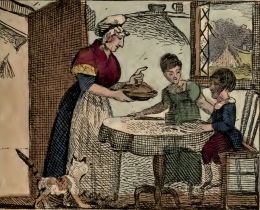
Serving the Pie

Another verse, entitled The Religion of the Hypocritical Presbyterians in meeter, (1661) reads, 
“Three Christmass or Minc'd Pies, all very fair, 
Methought they had this Motto, Though they flirt us 
And preach us down, ‘sub pondere crescit virtut’. 
(i.e. Under the weight of growing virtue). 
The Puritans, as I have mentioned, regarded all the traditional Christmas foods as vain gluttonies, and railed against, 
… Christmas Pye as an invention of the scarlet whore of Babylon, an hodge-podge of superstition, popery, the devil, and all his works.” 
Some say that ‘mince pie’ is a Puritanism and they ought really to be called Christmas Pies – the Puritans objected to the word Christmas which they associated with the Popish Christ’s Mass, and they also called them Nativity pies. Thankfully, there were opponents to the killjoys, as in this parody, 
“The high-shoe lords of Cromwell’s making

Were not for dainties — roasting, baking;

The chiefest food they found most good in

Was rusty bacon and bag pudding;

Plum-broth was popish, and mince-pie —

O that was flat idolatry!”


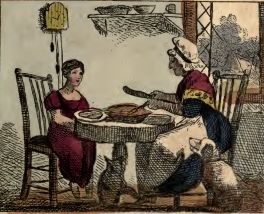
Cutting a Pie

The Puritans failed in their bid to outlaw Christmas (although you may occasionally hear the (false) urban myth that mince pies are still illegal in England), and Henri Misson, in his Travels in England (1719), notes, 
“Every family against Christmass makes a famous pye, which they call Christmas Pye. It is a great nostrum, the composition of this pasty: it is a most learned mixture of neat's-tongues, chicken, eggs, sugar, raisins, lemon and orange peel, various kinds of spicery, &c.” 
The early pies were baked in the shape of a crib or manger, and a figure of the Christ Child moulded from pastry was placed on top – this was called the Yule Dough or Dow (the practice had fallen into disuse by 1813, according to John Brand’s Observations on Popular Antiquities). Once sugar became more readily available, particularly from the Americas, the division in English cookery between sweet and savoury foods became more pronounced, with mince pies gravitating towards the sweet end of the spectrum. 

Minced Pies

Modern mince pies may contain suet, but also contain a mixture of dried and candied fruits, peels, citron, raisins, spices, brandy, sherry, cherries, figs and so on; the most traditional recipes contain thirteen ingredients, symbolising Christ and his twelve apostles. Mince meat may be made well in advance of Christmas and improves in taste as it matures and ages. 

Even more Mince Pies

The pies may be closed or open topped and can be served hot or cold, either on their own or together with a topping such as cream, custard or ice-cream. One old tradition is to eat a mince pie on every one of the twelve days of Christmas, each in a different house, which will bring luck to all of them. 

Little Jack Horner

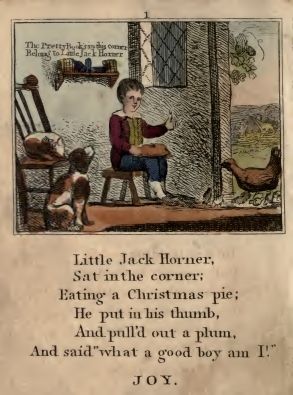
There is a story that began to circulate during the nineteenth century that during the dissolution of the monasteries under Henry VIII, the last abbot of Glastonbury Abbey, Richard Whiting, sought to sway and delight the King by sending him a Christmas pie in which he had hidden the deeds to twelve of the Abbey’s choicest estates. He sent the pie with one of his agents, Thomas Horner, who, during his journey to London, opened the pie and purloined the deeds to the manor of Mells, in Somerset, for himself. Henry dissolved Glastonbury Abbey anyway, Whiting was brutally slaughtered on trumped-up charges of treason, and Horner took possession of Mells, where his descendants still live. They say that the story is just that – a story – and their ancestor bought the manor from the crown, but the tale has come to be regarded as the inspiration for the nursery rhyme of Little Jack Horner, who pulled a ‘plum’ (i.e. Mells) from a pie. There is a couplet from the time that circulated in Somerset (and beyond) at the time, 
“Horner, Popham, Wyndham, and Thynne, 
When the abbot came out, then they went in.”

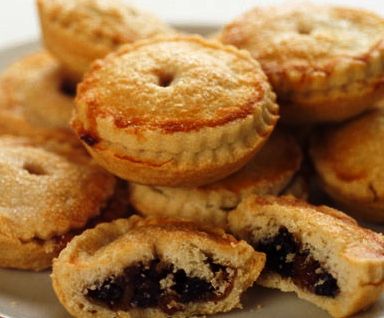
A Pair of Mince Pies (that's rhyming slang for eyes).